

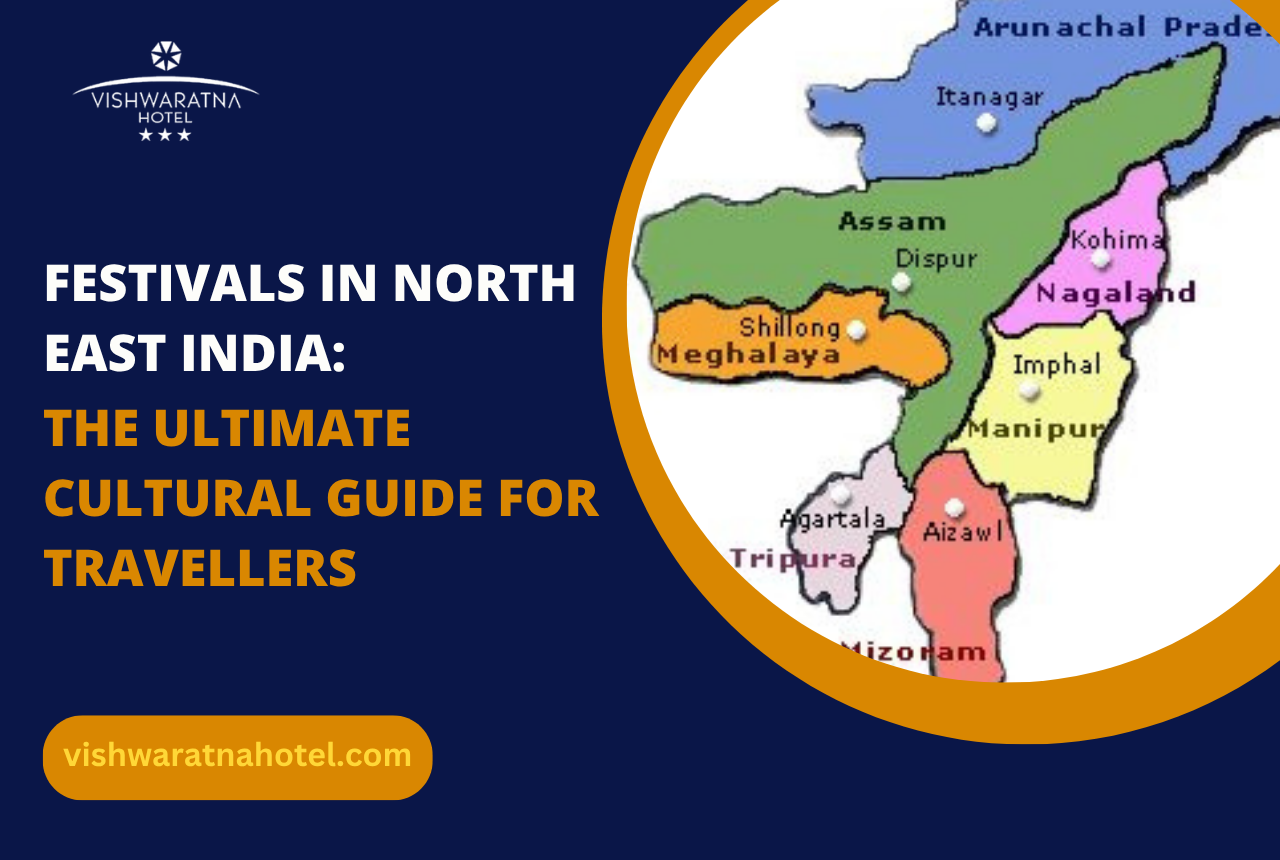
India is a land of celebrations, but nothing quite matches the raw energy, tribal authenticity, and breathtaking spectacle of festivals in North East India. Nestled between the eastern Himalayas and the plains of Assam, the region — lovingly called the Land of the Seven Sisters — is home to over 200 tribal communities, each with its own living traditions, ceremonial dances, and seasonal celebrations.
Whether you are a seasoned cultural traveller, a photographer chasing vivid colours, or a curious explorer drawn to ancient rituals, the festivals of North East India promise experiences that simply cannot be replicated anywhere else in the world.
Guwahati — Assam’s vibrant gateway city — sits at the heart of this cultural universe. Staying at Vishwaratna Hotel in Guwahati puts you within reach of some of the most iconic festivals in the entire northeast.
1. Bihu — The Soul of Assam
When & Where
Celebrated three times a year across Assam | Major celebrations in Guwahati
No list of festivals in North East India would be complete without Bihu — Assam’s most beloved festival and one of the oldest harvest celebrations in the subcontinent. There are three distinct Bihu festivals, each marking a different agricultural season:
- Rongali Bihu (Bohag Bihu) — April: The Assamese New Year, heralding spring and the start of planting season. This is the most joyous and widely celebrated of the three.
- Kongali Bihu (Kati Bihu) — October: A more solemn occasion marking the lean season, with prayers for a good harvest.
- Bhogali Bihu (Magh Bihu) — January: A harvest festival of feasting, communal bonfires (meji), and traditional games.
Rongali Bihu fills Guwahati’s parks and cultural stages with Bihu dance performances — a fast-paced, energetic folk dance performed by young men and women in vibrant traditional attire. The rhythmic beating of the dhol (drum) and the melodies of the pepa (buffalo horn flute) create an atmosphere that is unmistakably Assamese.
2. Hornbill Festival — The Festival of Festivals
When & Where
1–10 December every year | Kisama Heritage Village, Kohima, Nagaland
If there is one festival that defines the grand cultural tapestry of North East India, it is the Hornbill Festival of Nagaland. Dubbed the “Festival of Festivals,” it unites all the major Naga tribes under one roof in a spectacular ten-day celebration of dance, music, food, crafts, and sporting traditions.
The festival takes its name from the Indian Hornbill — a bird deeply venerated in Naga tribal folklore and frequently depicted in traditional headdresses and jewellery. Visitors can witness warriors in full ceremonial regalia, taste traditional Naga cuisine (smoked pork, fermented bamboo shoots), shop for handwoven textiles and indigenous crafts, and enjoy spectacular tribal performances that have been passed down through generations.
- All 16 major Naga tribes participate simultaneously
- International visitors attend from over 30 countries
- Features traditional wrestling, archery, and the iconic Naga warrior dances
- Night concerts blend indigenous folk music with contemporary artists
3. Ziro Music Festival — Where Indie Meets the Himalayas
When & Where
Last weekend of September | Ziro Valley, Arunachal Pradesh
India’s most celebrated boutique music festival, the Ziro Music Festival is set against the jaw-dropping backdrop of the Ziro Valley — a UNESCO World Heritage-nominated landscape of terraced paddy fields, pine-covered hills, and the unique villages of the Apatani tribe.
What makes Ziro special is its ethos: artists and audiences camp together in the valley, sharing meals and conversations in a genuinely egalitarian environment. The lineup consistently blends independent Indian artists with international folk and world music acts. True to its roots, the festival operates under a strict “leave no trace” policy — making it one of India’s most eco-conscious events.
- Genres span folk, indie, experimental, jazz, and world music
- Camping is the primary accommodation — book months in advance
- The surrounding Apatani villages offer unique cultural immersion opportunities
- Permits required for Arunachal Pradesh — apply at least 2 weeks before travel
4. Chapchar Kut — Mizoram’s Spring Dance Festival
When & Where
First week of March | Throughout Mizoram, with main events in Aizawl
Chapchar Kut is Mizoram’s most joyful festival, celebrated to mark the completion of the arduous forest-clearing process (jhum cultivation) and the arrival of spring. Communities across Mizoram come together in elaborate, colourful attire for traditional Cheraw (bamboo dance) performances — where dancers weave gracefully between rhythmically clapping bamboo poles in a display of precision and beauty.
The energy of Chapchar Kut is infectious. Music fills the streets, traditional rice beer flows freely, and the entire state seems to participate in the collective joy of a new agricultural season beginning.
5. Wangala — The Drum Festival of the Garos
When & Where
October–November | Meghalaya (particularly Tura and surrounding areas)
The Wangala Festival — also called the Hundred Drums Festival — is the post-harvest celebration of the Garo tribe of Meghalaya, one of the most dramatic festivals in North East India. Hundreds of traditional dama (drums) beat simultaneously in a thunderous, hypnotic rhythm that reverberates across the hills.
Garo men and women in traditional costumes of feathers, beads, and woven cloth perform the Wangala dance — a deliberate, stately procession that honours Saljong, the God of fertility and harvest. The spectacle of hundreds of dancers moving as one to the beat of a hundred drums is genuinely awe-inspiring.
6. Ambubachi Mela — A Sacred Pilgrimage in Guwahati
When & Where
June (during Assamese month of Ahar) | Kamakhya Temple, Guwahati, Assam
The Ambubachi Mela is one of the most unique religious festivals not just in North East India, but in the entire country. Held at the ancient Kamakhya Temple atop Nilachal Hill in Guwahati, it marks the annual menstruation of the Goddess Kamakhya — a celebration of feminine divinity and the earth’s fertility.
For four days, the temple closes its doors. When it reopens, hundreds of thousands of pilgrims, sadhus, tantric practitioners, and devotees from across India and beyond converge on Guwahati for one of the most spiritually charged events in the Hindu calendar.
7. Sangai Festival — Manipur’s Signature Cultural Showcase
When & Where
21–30 November | Imphal, Manipur
Named after Manipur’s endangered brow-antlered deer — the Sangai — this ten-day state festival is a comprehensive showcase of Manipuri culture, arts, and heritage. The Sangai Festival features classical Manipuri dance (a style recognised worldwide for its grace and spiritual depth), handloom exhibitions, indigenous sports like Yubi Lakpi and Mukna wrestling, and a rich programme of music and food.
The festival also spotlights the unique Loktak Lake — the largest freshwater lake in Northeast India — and the floating islands (phumdis) that the Sangai deer inhabit.
Month-by-Month Festival Calendar for North East India
| Month | Festival | State / Location |
| January | Bhogali Bihu | Assam (statewide) |
| March | Chapchar Kut | Mizoram |
| April | Rongali Bihu | Assam / Guwahati |
| April | Aoleang Festival | Nagaland |
| June | Ambubachi Mela | Guwahati, Assam |
| September | Ziro Music Festival | Arunachal Pradesh |
| October | Kongali Bihu | Assam |
| Oct–Nov | Wangala Festival | Meghalaya |
| November | Sangai Festival | Manipur |
| December | Hornbill Festival | Nagaland |
Conclusion
Festivals in North East India are far more than calendar events — they are living expressions of communities that have nurtured their cultural identities for centuries. From the thunderous drums of the Wangala to the lyrical grace of Manipuri dance at the Sangai Festival; from the tribal splendour of Hornbill to the spiritual enormity of Ambubachi Mela in Guwahati — each festival offers a window into a world that is vivid, deeply rooted, and genuinely transformative.
Guwahati stands at the centre of it all. As the gateway city to the Seven Sisters, it is the natural starting point for any North East India festival journey — and Vishwaratna Hotel is here to ensure your stay is as memorable as the celebrations themselves.
Frequently Asked Questions
What is the most famous festival of North East India?
The Hornbill Festival of Nagaland is widely considered the most famous festival in North East India. Celebrated every December at Kisama Heritage Village near Kohima, it brings together all 16 major Naga tribes and attracts visitors from around the world. It is often called the “Festival of Festivals.”
What is the best time to visit North East India for festivals?
The best times are April (for Rongali Bihu in Assam), September (Ziro Music Festival in Arunachal Pradesh), and November–December (Sangai Festival in Manipur and Hornbill Festival in Nagaland). October to December is generally considered peak festival season across the northeast.
What is the oldest festival in North East India?
Bihu of Assam is considered the oldest festival in North East India, with roots going back centuries and deep connections to the agricultural and seasonal cycles of Assamese rural life.
Is North East India safe for tourists during festivals?
Yes, North East India is generally welcoming and safe for tourists during festival seasons. Local communities take great pride in hosting visitors. As with any travel, basic precautions apply: keep documents safe, stay in reputed hotels, and follow local customs respectfully.
Do I need permits to attend festivals in North East India?
Some states in Northeast India — particularly Arunachal Pradesh, Manipur, Mizoram, and Nagaland — require an Inner Line Permit (ILP) or Protected Area Permit (PAP) for Indian and international visitors respectively. Apply online at least 2 weeks before your travel date. Assam, Meghalaya, and Sikkim do not require special permits.
Where should I stay in Guwahati during North East India festivals?
Vishwaratna Hotel in Guwahati is a preferred choice for travellers exploring Northeast India’s festivals. Conveniently located near Fancy Bazaar and major transport hubs, the hotel offers comfortable rooms, easy access to Guwahati’s cultural venues, and a well-connected base for day trips and onward journeys into the region.