

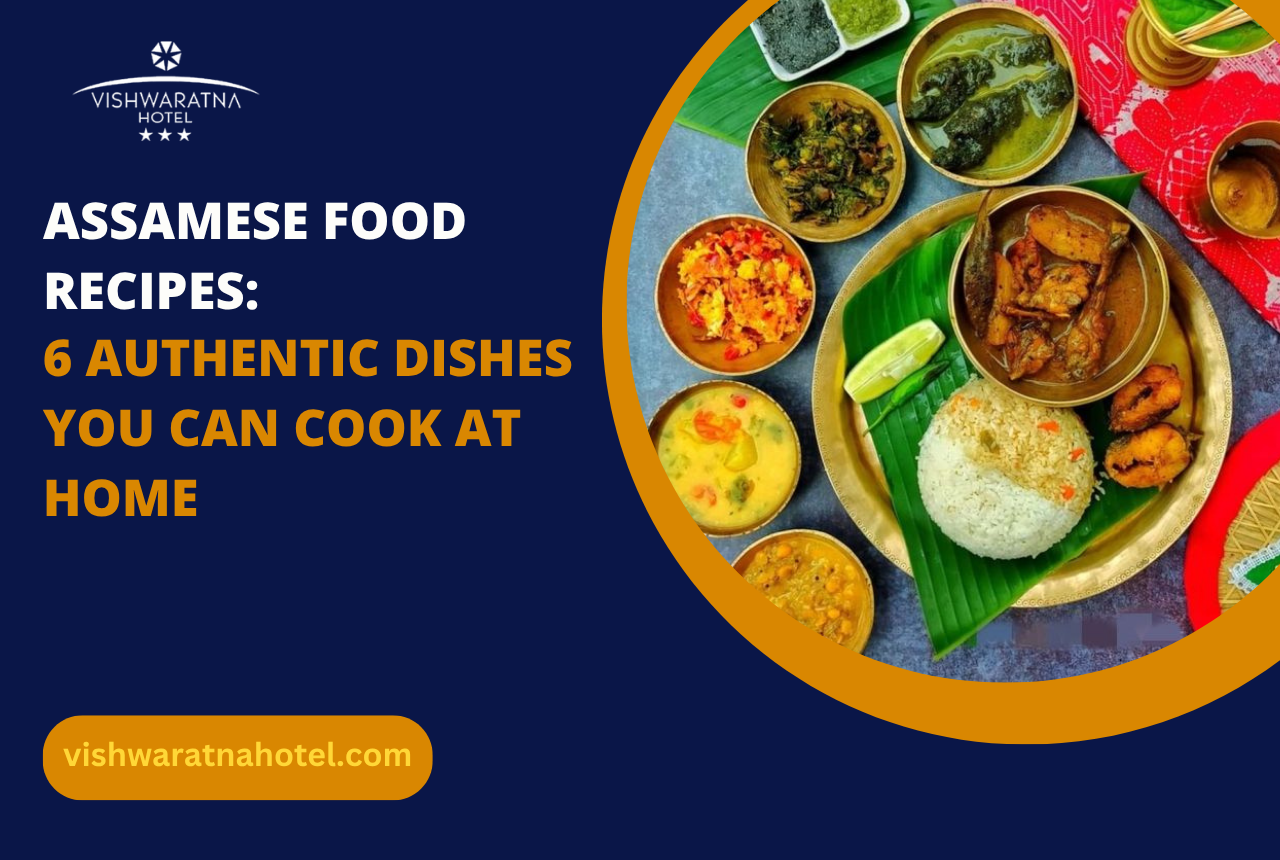
You do not have to be in Guwahati to taste Assam. The beauty of Assamese food recipes is how forgiving they are: no long spice lists, no hours of simmering, no hard-to-master techniques. This is home cooking in the truest sense — light, fresh, and built on ingredients allowed to speak for themselves.
Below are six authentic recipes that cover the full arc of an Assamese meal — a sour fish curry, a comforting mash, the unique alkaline khar, quick stir-fried greens, and two festive Bihu sweets. Each comes with an ingredient list, step-by-step method, and a cook’s tip. If you would rather understand the wider cuisine first, start with our complete Assamese food guide, then come back here to cook.
Assamese Food Recipes: The Assamese Pantry
A handful of ingredients define the flavour of Assamese cooking. Stock these and most recipes fall into place:
- Mustard oil (xoriohor tel) — the signature fat, used raw in pitika and heated for curries.
- Khar (kola khar) — an alkaline extract from banana-peel ash; the one truly unique Assamese ingredient.
- Souring agents (tenga) — tomato, lemon, elephant apple (ou tenga), or dried thekera give curries their tang.
- Fenugreek seeds (methi guti) — a pinch, tempered in oil, is the classic base for a sour curry.
- Rice — aromatic joha for everyday meals, sticky bora rice flour for pithas.
- Jaggery (gur) and coconut — the base of nearly every Assamese sweet.
Short on any of these? A full substitutions table appears near the end of this guide.
6 Authentic Assamese Recipes
From an everyday sour fish curry to Bihu-season sweets, here is how to cook Assam at home.
1. Masor Tenga — Assamese Sour Fish Curry
| Prep 15 min | Cook 25 min | Serves 4 | Type Non-veg |
Ingredients
- 500 g rohu or catla fish, cut into steaks
- 2 medium tomatoes, chopped
- 1 tsp turmeric powder
- 3–4 tbsp mustard oil
- ¼ tsp fenugreek (methi) seeds
- 2–3 green chillies, slit
- Juice of ½ lemon or a few pieces of ou tenga (optional, for extra tang)
- Fresh coriander, chopped, and salt to taste
Method
- Rub the fish with ½ tsp turmeric and a little salt; rest for 10 minutes.
- Heat mustard oil until it just smokes, then lower the heat. Lightly fry the fish until golden on both sides; remove and set aside.
- In the same oil, temper the fenugreek seeds until they darken slightly — do not let them burn or they turn bitter.
- Add the tomatoes, remaining turmeric, green chillies and salt. Cook until the tomatoes break down into a soft pulp.
- Pour in about 2 cups of water, bring to a gentle boil, and simmer 5 minutes to form a light, sour broth.
- Slide in the fried fish and simmer 4–5 minutes. Adjust the sourness with lemon or ou tenga if using.
- Finish with fresh coriander and serve hot over plain steamed rice.
2. Aloo Pitika — Assamese Mashed Potato
| Prep 5 min | Cook 15 min | Serves 4 | Type Veg / Vegan |
Ingredients
- 4 medium potatoes, boiled and peeled
- 1 small onion, finely chopped
- 2 tbsp raw mustard oil
- 1–2 green chillies, finely chopped
- 2 tbsp fresh coriander, chopped
- Salt to taste
Method
- Mash the warm boiled potatoes until smooth and free of lumps.
- Add the chopped onion, green chilli, coriander and salt.
- Drizzle over the raw mustard oil and mix thoroughly by hand or spoon.
- Shape into a small mound and serve alongside rice and dal.
3. Khar — The Alkaline First Course
| Prep 10 min | Cook 20 min | Serves 4 | Type Veg / Vegan |
Ingredients
- 1 small raw (green) papaya, peeled and cubed
- ½ cup split pigeon pea (arhar), pre-soaked (optional)
- 2–3 tbsp kola khar, OR a small pinch of edible baking soda (see note)
- ½ tsp turmeric powder
- 2 tbsp mustard oil
- 1–2 dried red chillies, and salt to taste
Method
- Boil the papaya cubes (and pulses, if using) with turmeric and salt until soft.
- Stir in the kola khar (or the pinch of soda) and simmer 5–7 minutes so the flavour infuses.
- In a separate pan, heat mustard oil and temper the dried red chillies.
- Pour the tempering over the khar, mix, and simmer 2 minutes more.
- Serve as the first course of the meal with plain rice.
4. Xaak Bhaji — Assamese Stir-Fried Greens
| Prep 10 min | Cook 10 min | Serves 3–4 | Type Veg / Vegan |
Ingredients
- 1 large bunch leafy greens (lai xaak / mustard greens, spinach or amaranth), chopped
- 3–4 garlic cloves, crushed
- 2 tbsp mustard oil
- 1–2 dried red chillies
- Salt to taste (a squeeze of lemon optional)
Method
- Heat mustard oil in a wide pan or kadhai until it just smokes; lower the heat.
- Add the crushed garlic and dried red chillies; fry until fragrant.
- Add the chopped greens and salt, and toss on high heat.
- Stir-fry 5–7 minutes until the greens wilt and the water evaporates — they should stay bright, not mushy.
- Serve hot as a light, nutritious side.
5. Narikol Laru — Coconut & Jaggery Ladoo
| Prep 10 min | Cook 15 min | Makes ~15 | Type Sweet |
Ingredients
- 2 cups freshly grated coconut (or desiccated coconut)
- ¾ cup grated jaggery (gur)
- 2 tbsp water
- ¼ tsp cardamom powder
Method
- In a heavy pan, melt the jaggery with the water on low heat until it forms a thick syrup.
- Add the grated coconut and cardamom, and mix well.
- Cook, stirring continuously, until the mixture thickens and starts leaving the sides of the pan (8–10 minutes).
- Let it cool slightly until just warm enough to handle.
- Grease your palms and roll the mixture into small round ladoos.
- Cool completely so they firm up, then store in an airtight container.
6. Ghila Pitha — Jaggery Rice Fritters
| Prep 20 min | Cook 20 min | Makes ~12 | Type Sweet |
Ingredients
- 1 cup rice flour (bora / glutinous rice flour if available)
- ½ cup grated jaggery
- About ¾ cup warm water
- A pinch of salt
- Oil, for deep frying
Method
- Dissolve the jaggery in warm water and strain to remove impurities.
- Gradually whisk the jaggery water into the rice flour with a pinch of salt, to a smooth, lump-free batter a little thicker than pancake batter. Rest 15–20 minutes.
- Heat oil in a deep pan over medium heat.
- Pour a small ladle of batter into the oil so it spreads into a round disc.
- Fry until golden and crisp at the edges, turning once (about 2–3 minutes).
- Drain on paper and serve warm.
Ingredient Substitutions & Where to Find Them
Cooking Assamese food outside Assam? These easy swaps keep the flavours close to authentic.
| Assamese Ingredient | What It Is | Easy Substitute |
| Kola khar | Banana-ash alkaline extract | Tiny pinch of edible baking soda |
| Ou tenga | Elephant apple (souring) | Tomato plus a squeeze of lemon |
| Thekera | Dried Garcinia (souring) | Tamarind or lemon juice |
| Bora rice flour | Glutinous rice flour | Regular rice flour with a little glutinous flour |
| Joha rice | Aromatic short-grain rice | Any small-grain aromatic rice |
| Rohu / catla | Freshwater river fish | Any firm freshwater fish steak |
Rather Someone Else Did the Cooking?
When you’re in Guwahati, skip the prep and enjoy a full spread at The Curry Lounge — the multicuisine in-house restaurant at Vishwaratna Hotel — then unwind at Khayal Bar. Centrally located and open all day.
Frequently Asked Questions
What is the easiest Assamese dish to cook first?
Aloo pitika (mashed potato with raw mustard oil, onion and green chilli) is the easiest starting point — it needs no cooking beyond boiling the potatoes and takes minutes. Xaak bhaji (stir-fried greens) is a close second.
Can I make khar without banana ash?
Traditional khar uses kola khar, an alkaline extract from sun-dried banana-peel ash. If you can’t source it, a very small pinch of edible baking soda is the common home substitute. The result is close in character but not identical, so use it sparingly.
What oil is used in Assamese cooking?
Mustard oil is the defining fat of Assamese cuisine. It is heated to smoking point for curries and used raw (unheated) in pitika, where its sharp pungency is essential to the flavour.
What can I use instead of ou tenga in masor tenga?
Ou tenga (elephant apple) gives masor tenga its signature sourness, but it is hard to find outside Assam. Ripe tomato with a squeeze of lemon, or a little tamarind, recreates the tang well.
Are Assamese recipes vegetarian-friendly?
Very much so. Aloo pitika, khar, xaak bhaji, narikol laru and ghila pitha in this guide are all vegetarian, and most are vegan. Assamese cuisine has a deep vegetarian repertoire built around greens, pulses and seasonal produce.
How long do narikol laru keep?
Stored in an airtight container, coconut-and-jaggery laru keep well for several days at room temperature. Made with fresh (rather than desiccated) coconut, they are best enjoyed within three to four days.