

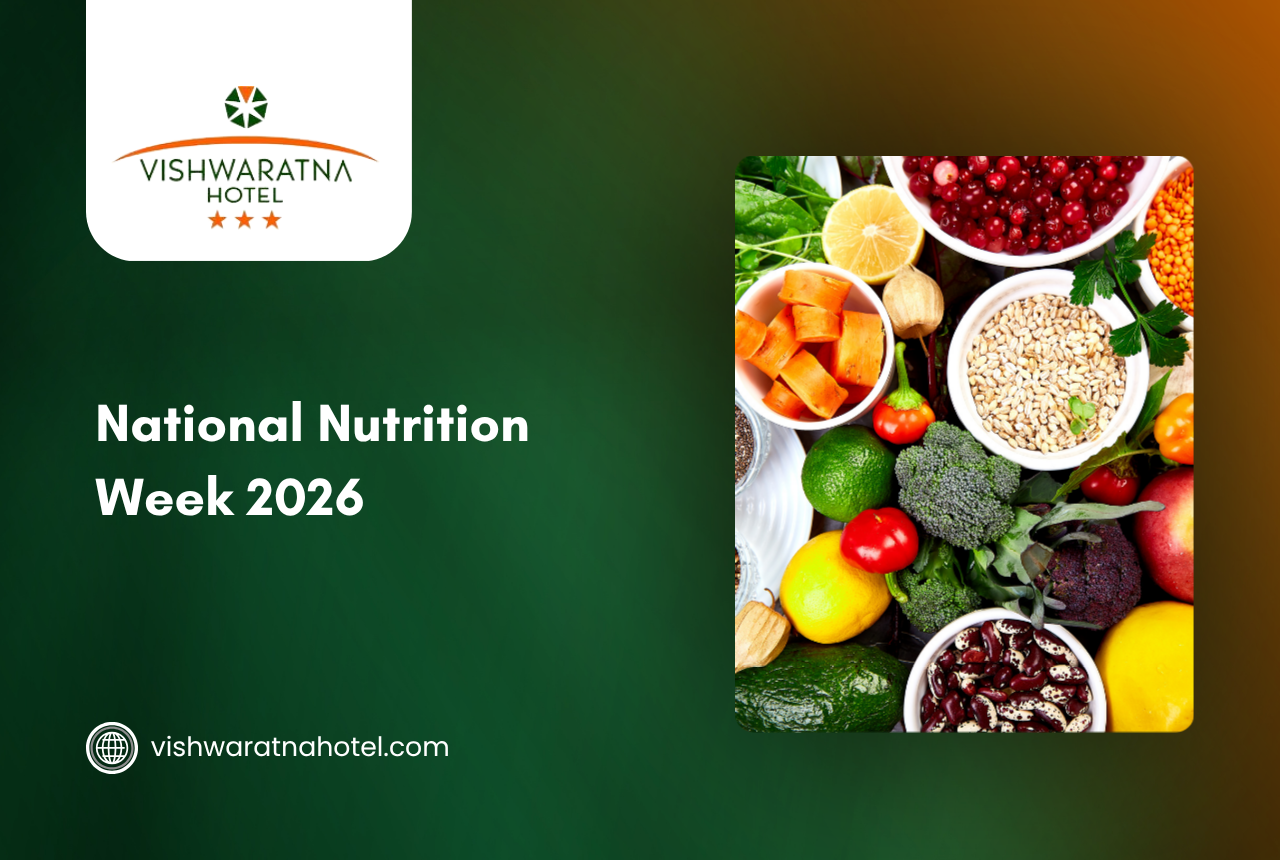
Every September, dietitians, schools and hospitals across India put up the same posters about balanced diets and portion control. But walk into a Kamrup household during any ordinary lunch, and you’ll find most of that advice already sitting on the plate — a bowl of khar, a side of tenga, a fistful of bamboo shoot, rice, and a green vegetable cooked with almost no oil. National Nutrition Week 2026 is a good moment to notice that Assam’s everyday food culture has been practising nutritional balance for generations, long before it had a name.
This year, National Nutrition Week is observed from 1 to 7 September 2026, and it’s a fitting week for anyone in Guwahati — resident, business traveller, or leisure guest — to pay a little closer attention to what’s on the plate. Whether you’re here for a conference, a family function, or a few days of sightseeing, this guide walks through what the week is about, why Northeast India’s food habits are worth studying, and how to eat well in Guwahati without giving up on flavour.
What Is National Nutrition Week 2026?
National Nutrition Week is an annual awareness campaign observed across India from 1 to 7 September. It was first launched in 1982 by the Food and Nutrition Board under the Ministry of Women and Child Development, with the goal of helping ordinary households understand how food choices affect health, growth, and productivity.
The official theme for National Nutrition Week 2026 had not been announced at the time of writing. In past years, themes have circled around balanced diets, reducing malnutrition, dietary diversity, and food safety — all of which stay relevant regardless of the exact wording chosen for a given year. Through the week, schools, hospitals, and community health workers typically run seminars, cooking demonstrations, and awareness drives to reinforce these basics.
Quick Facts: National Nutrition Week 2026
Dates: 1 – 7 September 2026, observed nationwide in India
Started: 1982, by the Food and Nutrition Board, Ministry of Women and Child Development
Focus areas: balanced diets, dietary diversity, reducing malnutrition, healthy lifestyle habits
2026 theme: to be confirmed by the Government of India; core message remains awareness and balance
Why Northeast India’s Food Culture Is a Nutrition Case Study
Assam and the wider Northeast rarely get mentioned in national conversations about nutrition, yet the region’s everyday cooking quietly ticks most of the boxes nutritionists spend the week explaining. Meals are typically low in refined oil, built around steaming, boiling, and light sautéing rather than deep frying. Fermented and alkaline preparations like khar aid digestion. Sour elements such as tenga add vitamin C and help the body absorb iron. Leafy greens, bamboo shoot, and a wide variety of freshwater fish bring in fibre, minerals, and lean protein without much processing in between.
Traditional Assamese Foods and Their Nutritional Role
| Food | What It Is | Nutritional Benefit |
|---|---|---|
| Khar | Alkaline dish made with raw papaya, pulses, and filtered ash water | Aids digestion, balances acidity, low in fat |
| Tenga | Sour fish or vegetable curry made with tomato, lemon, or elephant apple | Rich in vitamin C, aids iron absorption |
| Bamboo shoot (Khorisa) | Fermented or fresh bamboo shoot used in curries | High in fibre, low in calories, supports gut health |
| Black rice (Bora Saul) | Sticky, dark-hulled rice variety native to Assam | Rich in antioxidants and complex carbohydrates |
| Freshwater fish (Rou, Bhokua) | Common protein source across Assamese meals | Lean protein, omega-3 fatty acids |
| Xaak (leafy greens) | Assorted local greens cooked with minimal oil | High in iron, folate, and dietary fibre |
How Vishwaratna Hotel Supports a Balanced Plate
At Hotel Vishwaratna, National Nutrition Week isn’t a one-week idea — it shapes how The Curry Lounge, our in-house multicuisine restaurant, plans its everyday menu. Guests staying with us, whether on a short business trip or a longer family visit, can order both regional Assamese preparations and familiar national dishes, cooked to order rather than sitting under a heat lamp.
Eat Well During Your Stay at Vishwaratna Hotel
- The Curry Lounge offers a rotating selection of Assamese, North Indian, and continental dishes, including lighter, less-oil options on request.
- 24/7 room service means a balanced meal is available whenever your schedule — meetings, travel, or events — demands it.
- Our Doctor-on-Call facility is available for any dietary or health concern that comes up during your stay.
- Ask our restaurant team for a lighter regional thali featuring khar, xaak, and steamed fish if you want to try Assam’s everyday approach to balance.
Simple Nutrition Habits to Build During This Week (and After)
- Fill half your plate with vegetables or greens before adding rice or bread.
- Choose a fermented or sour element, like tenga, alongside heavier dishes to aid digestion.
- Swap deep-fried snacks for steamed, roasted, or lightly sautéed alternatives most days of the week.
- Keep a source of lean protein — fish, dal, or paneer — in at least two meals a day.
- Stay hydrated through the day, especially if you’re travelling or attending back-to-back meetings.
- Read packaged food labels for added sugar and sodium before buying snacks for the room.