

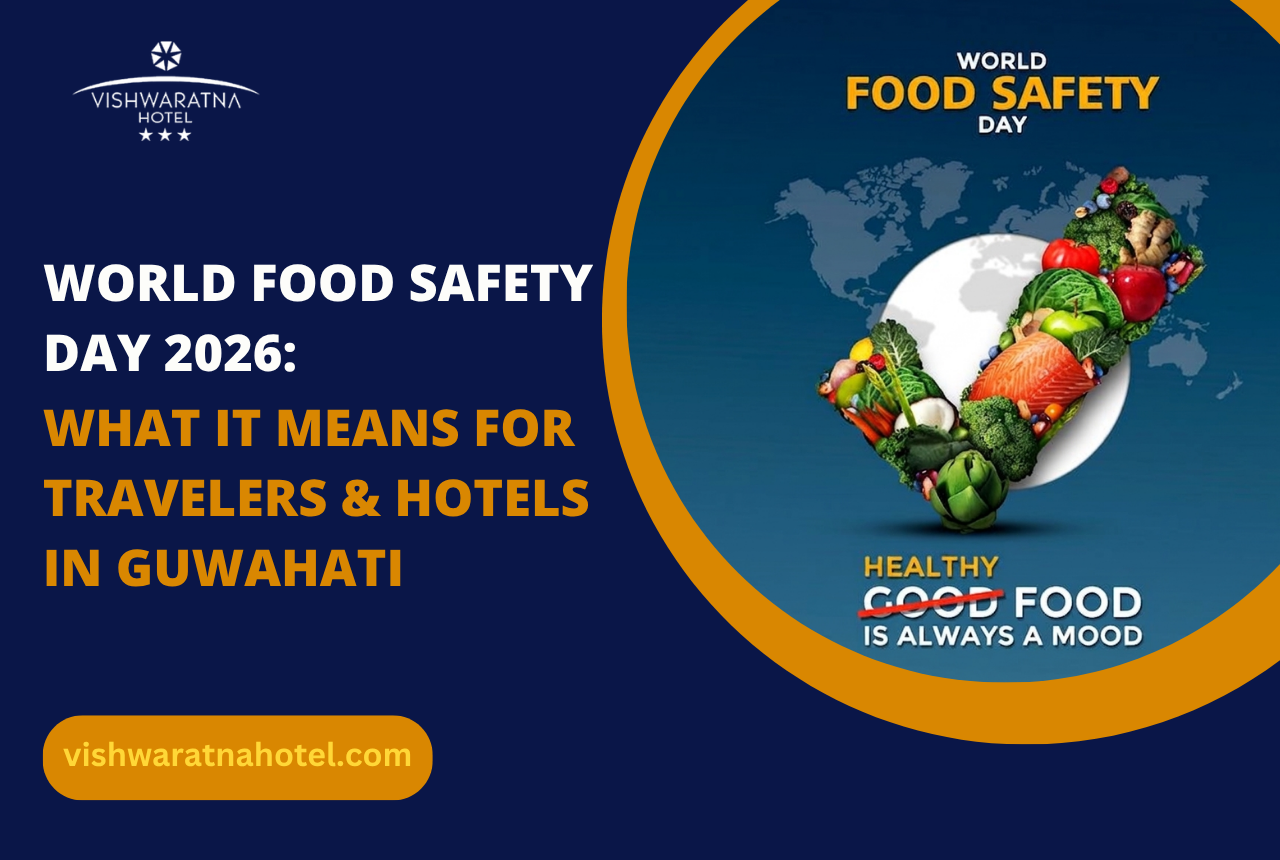
Every year on June 7, the world pauses to reflect on something we do three times a day — eat. World Food Safety Day 2026 carries an urgent and empowering theme: “From burden to solutions — safe food everywhere.” Co-led by the World Health Organization (WHO) and the Food and Agriculture Organization (FAO), this global observance reminds us that unsafe food isn’t just a health risk — it is an economic, social, and human crisis.
At Vishwaratna Hotel, Guwahati, food safety is not a checkbox — it is a daily commitment. Situated in the heart of Assam on A.T. Road near Fancy Bazaar, we serve hundreds of guests — tourists, business travelers, and locals — every day. This World Food Safety Day, we want to share what the theme means, why it matters in Northeast India, and how you can protect yourself and your family with practical food safety tips.
What Is World Food Safety Day 2026?
World Food Safety Day is observed annually on June 7 since its establishment by the United Nations in 2018. The day brings together governments, food businesses, health organizations, and everyday consumers to highlight the importance of safe food systems — from farm to fork.
2026 Theme: “From Burden to Solutions — Safe Food Everywhere”
The 2026 theme places a powerful spotlight on data-driven action. According to WHO and FAO, unsafe food causes:
- 600 million cases of foodborne diseases every year worldwide
- 125,000 deaths in children under 5 annually due to contaminated food
- At least 200 different illnesses linked to food — from diarrhoea to cancers
This year, WHO will release updated Foodborne Disease Estimates — the most comprehensive global data report since 2015. The new report covers 31 foodborne hazards and now includes four heavy metals: arsenic, cadmium, lead, and methylmercury. These numbers will help governments and food businesses identify where the greatest risks lie and target solutions most effectively.
The core message: the burden of unsafe food is preventable — and data is the first step to solutions.
Why Food Safety Matters More in Northeast India
Northeast India, including Guwahati and Assam, has a rich and vibrant food culture — from traditional fish curries and rice preparations to street-side momos and local sweets. However, the region also faces specific food safety challenges:
- High humidity and heat accelerate bacterial growth in food
- A large street food and informal dining economy with variable hygiene standards
- Seasonal flooding affecting water quality and agricultural produce
- Increased tourist footfall bringing diverse expectations of food safety
For travelers visiting Guwahati — India’s gateway to the Northeast — choosing a hotel with strong food hygiene standards isn’t just about comfort. It is a health decision.
Vishwaratna Hotel’s Commitment to Food Safety in Guwahati
Since 2002, Vishwaratna Hotel has served thousands of guests across its dining and banquet facilities. Our kitchen operations are built around the following food safety pillars:
1. Trained Kitchen Staff
Every member of our kitchen team is trained in proper food handling, storage temperature protocols, and personal hygiene standards. Regular internal assessments are conducted to maintain consistent standards.
2. Sourcing & Supply Chain Transparency
We source our produce and ingredients from verified local suppliers in Guwahati and Assam. Fresh, seasonal produce is prioritized — both for quality and to minimize the risk of contamination during long-distance transport.
3. Temperature-Controlled Storage
Our kitchen maintains proper cold chain management — from refrigeration of raw meats and dairy to appropriate dry-goods storage — ensuring that food safety standards are maintained at every stage.
4. FSSAI-Aligned Standards
Our food operations are guided by the Food Safety and Standards Authority of India (FSSAI) regulations, India’s primary food safety governance framework. FSSAI compliance ensures that our guests receive food prepared to nationally recognized standards.
5. Clean Kitchen, Clean Conscience
Regular deep-cleaning schedules, pest control, and waste management protocols are in place to maintain a hygienically safe food environment — visible in our kitchens and felt in every meal served.
5 Practical Food Safety Tips for Travelers in Guwahati
Whether you are visiting Guwahati for business, tourism, or attending an event at our hotel, here are five research-backed food safety tips to keep you healthy:
- 1. Choose Hotels with Certified Food Handling Practices: Always prefer hotels and restaurants that follow FSSAI guidelines. Look for hygiene ratings and certificates displayed at the property.
- 2. Be Cautious with Street Food: Street food in Guwahati is delicious — but choose vendors with high foot traffic (which indicates fresh turnover), clean serving surfaces, and visible cooking activity.
- 3. Drink Safe Water: Always consume sealed bottled water or water confirmed as purified by your hotel. Avoid ice in unknown establishments during peak monsoon months.
- 4. Eat Freshly Cooked Food: In hot and humid Assam, food left at room temperature for more than 2 hours can become unsafe. Prefer freshly cooked meals, especially with fish, meat, and dairy.
- 5. Wash Hands Thoroughly: The WHO recommends washing hands with soap for at least 20 seconds before eating or handling food. This simple act prevents the majority of foodborne illness transmission.
Food Safety Is Everyone’s Business — Including Yours
The slogan of World Food Safety Day is: “Food safety is everyone’s business.” This is not just a catchy phrase — it is a call to action for every person in the food chain, from farmers and distributors to hotel chefs and travelers eating out.
In Guwahati — a growing hub for business travel, tourism, and MICE events across Northeast India — the hospitality industry has a special responsibility. When you choose to stay and dine at Vishwaratna Hotel, you are choosing a partner who takes that responsibility seriously.
This World Food Safety Day, we invite you to:
- Ask questions about food sourcing and preparation wherever you dine
- Support food establishments that prioritize hygiene and safety
- Spread awareness among your family and colleagues about foodborne illness prevention
- Celebrate the theme “From burden to solutions” — because every safe meal is a solution
Plan Your Stay at Vishwaratna Hotel, Guwahati
Whether you are traveling to Guwahati for leisure, attending a corporate event, or celebrating a family occasion, Vishwaratna Hotel offers a safe, comfortable, and welcoming experience — right in the heart of the city.
- Location: A.T. Road, Fancy Bazaar, Guwahati, Assam
- Dining: Multi-cuisine restaurant with FSSAI-aligned kitchen practices
- Events: Banquet and conference facilities for up to 500 guests
Booking: Contact us at vishwaratnahotel.com to reserve your stay
Frequently Asked Questions About World Food Safety Day 2026
Q: When is World Food Safety Day 2026?
World Food Safety Day 2026 is observed on Sunday, June 7, 2026.
Q: What is the theme of World Food Safety Day 2026?
The official theme is “From burden to solutions — safe food everywhere,” established by WHO and FAO to highlight the global health burden of unsafe food and promote data-driven, science-based solutions.
Q: How many people are affected by foodborne diseases each year?
According to WHO estimates, approximately 600 million people fall ill due to unsafe food annually, resulting in 420,000 deaths globally. Children under 5 are the most vulnerable group.
Q: What is FSSAI and why does it matter for hotels in India?
FSSAI (Food Safety and Standards Authority of India) is the national regulatory body that sets food safety standards for restaurants, hotels, and food businesses across India. Compliance ensures that guests receive food prepared and handled according to scientifically validated safety standards.
Q: How does Vishwaratna Hotel celebrate World Food Safety Day?
Vishwaratna Hotel observes World Food Safety Day by reinforcing our internal food safety training, conducting kitchen hygiene inspections, and raising awareness among our staff and guests. We believe safe food is a fundamental right and a cornerstone of responsible hospitality.